Safe Water, Restored With Dignity
Floodwater contaminates the very wells and ponds people depend on. Our WASH response pairs solar-powered filtration with hygiene promotion and accessible sanitation — handed to the communities themselves, most of them women and children, so the benefits last well beyond the emergency.
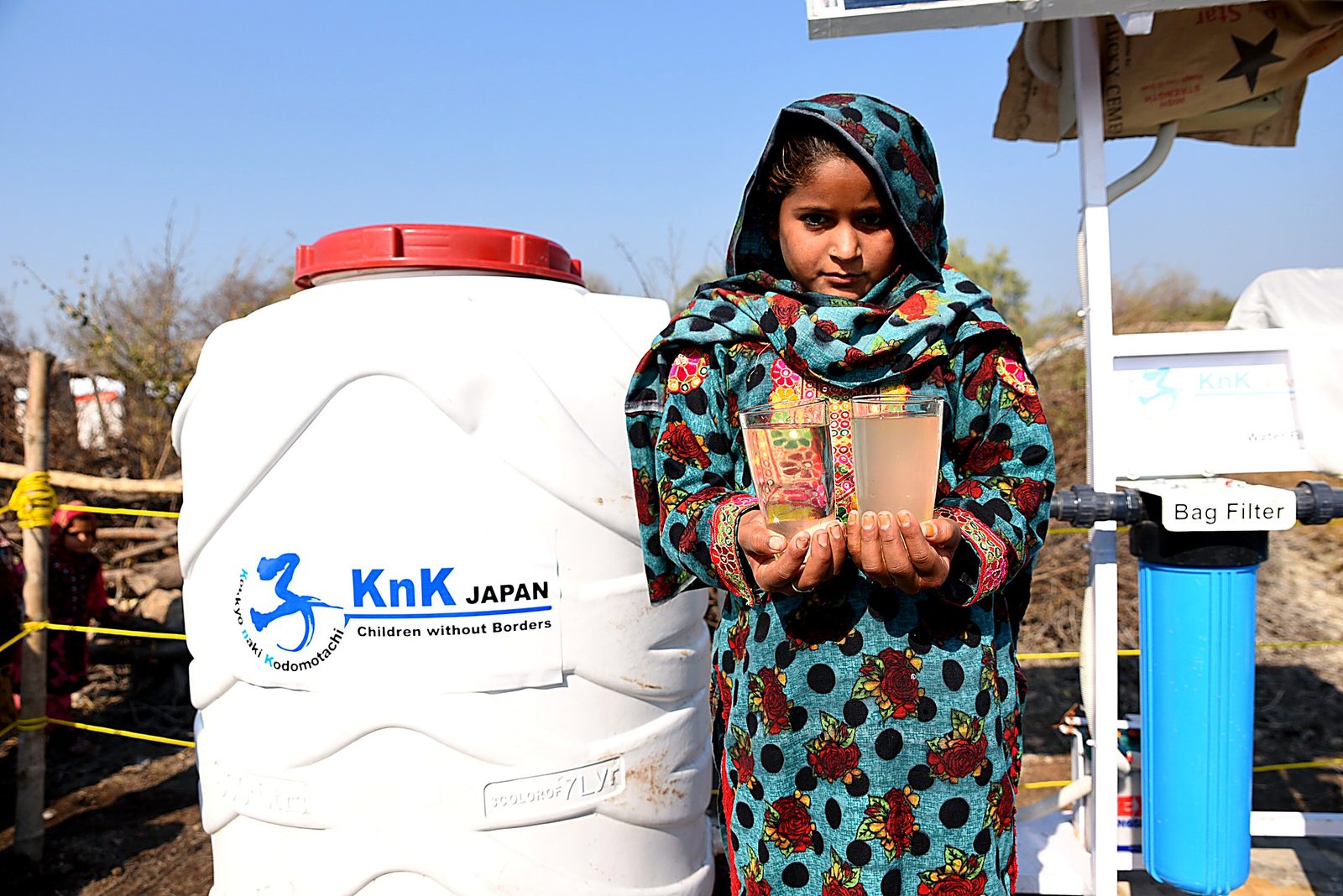
The same source, transformed
After the 2022 floods, water testing across the target villages found heavy bacterial contamination and, in places, total dissolved solids as high as 4,000–5,000 ppm — far above the WHO limit of 500 ppm — alongside elevated arsenic.
Once KnK Japan's solar-powered plants were running, total and faecal coliform fell to 0 / 100 ml, arsenic dropped below 5 µg/L, and TDS came down to under 210 ppm — well within WHO drinking-water standards.
Two pillars, one resilient system
KnK Japan pairs gravity-fed water systems with solar-powered filtration — affordable to run, durable against climate shocks, and operable without fuel or grid power.
Nature-based solutions
Working with the water cycle rather than against it — capturing rain, recharging aquifers and moving water by gravity.
- Rooftop & surface rainwater harvesting
- Groundwater recharge wells
- Gravity-flow distribution
- Resilient water storage
Technology-based solutions
Solar-powered treatment and monitoring that deliver WHO-compliant water with no recurring fuel cost.
- Solar filtration units
- Solar ultrafiltration & RO plants
- Water-quality monitoring
- Dignified, gender-separated sanitation
The Integrated WASH System
An illustrative model of how the two pillars fit together. Drag to rotate the facility, or tap a component to see how rain becomes safe, gravity-fed drinking water — and how every drop is recharged back to the aquifer.
Conceptual diagram of the integrated approach. Not all components are present at every site.
Safe water. Safe practices. Safe sanitation.
Safe drinking water, hygiene knowledge and dignified sanitation — delivered together as one integrated response, and built to keep working long after the emergency.
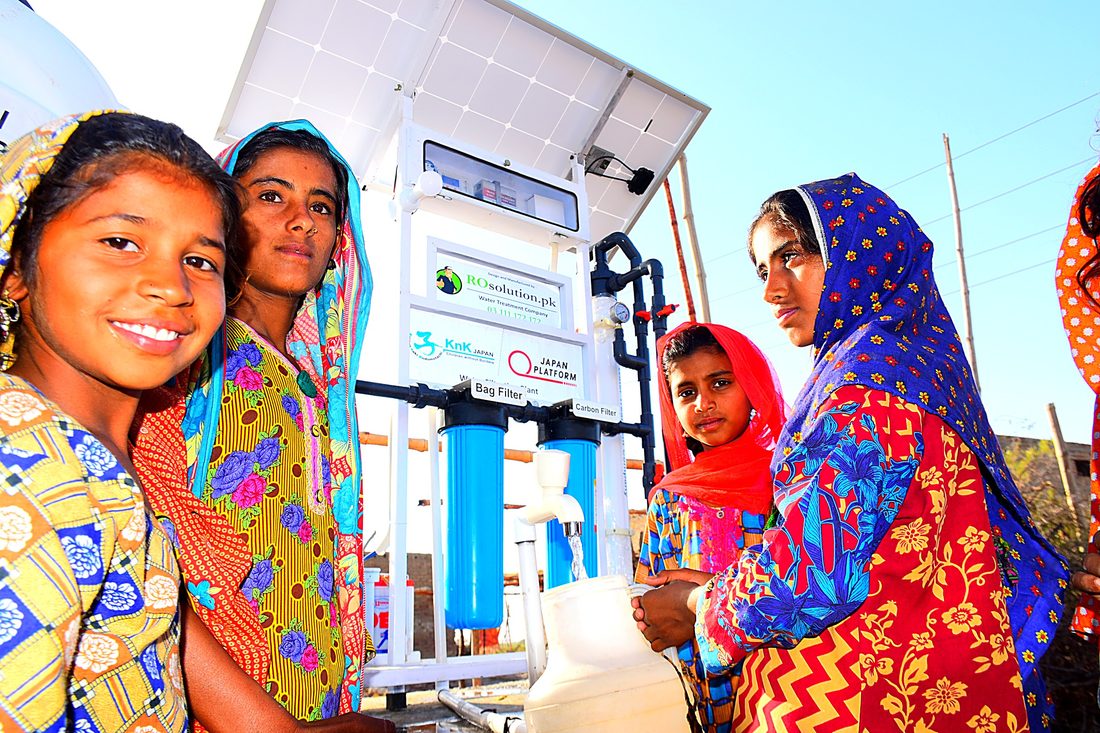
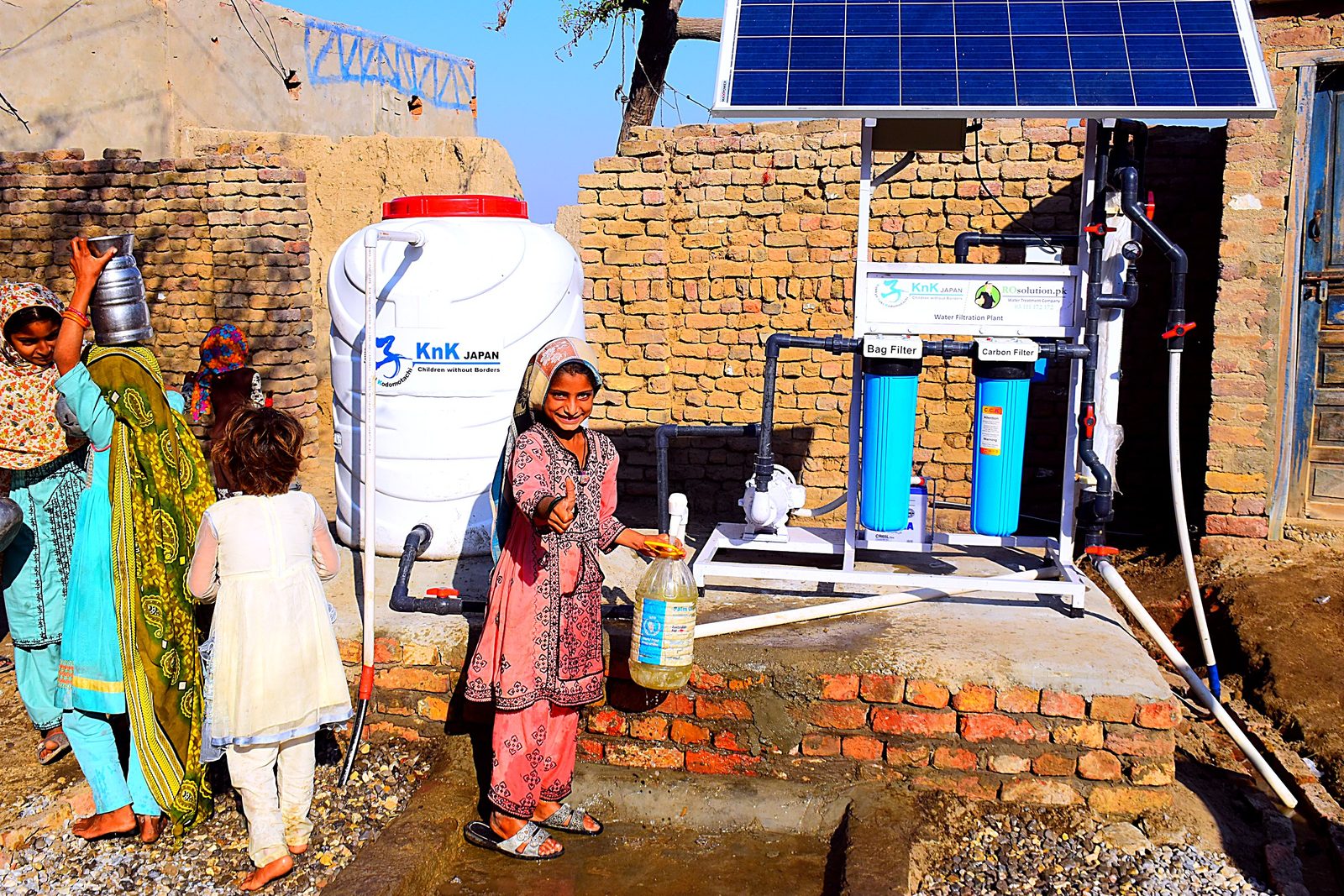
Solar-powered filtration
Multi-stage plants — bag filter and carbon filter, with ultrafiltration or reverse-osmosis where dissolved solids run high — powered by their own solar panels and running fully off-grid, installed with local technical partners and tested against WHO standards.
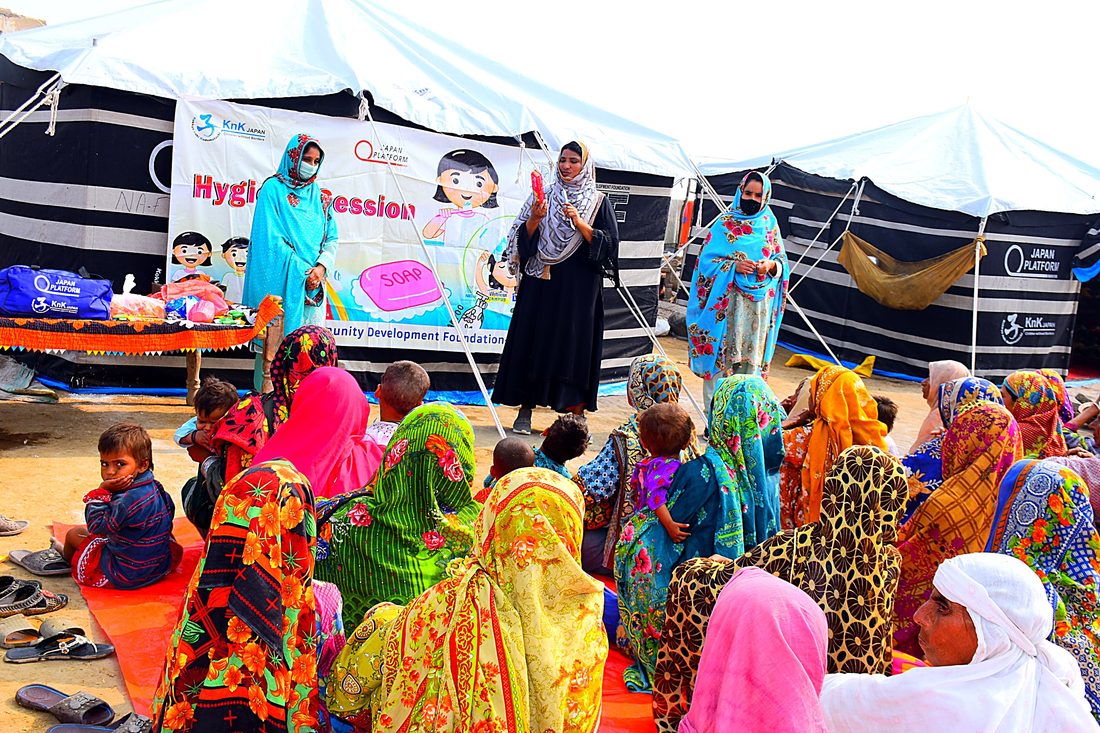
Knowledge that prevents disease
Hygiene sessions on handwashing and safe water use, led with and for women and children. In the 2022 response alone, 51 sessions were held; afterwards, 98% of participants could name three ways to prevent WASH-related disease.
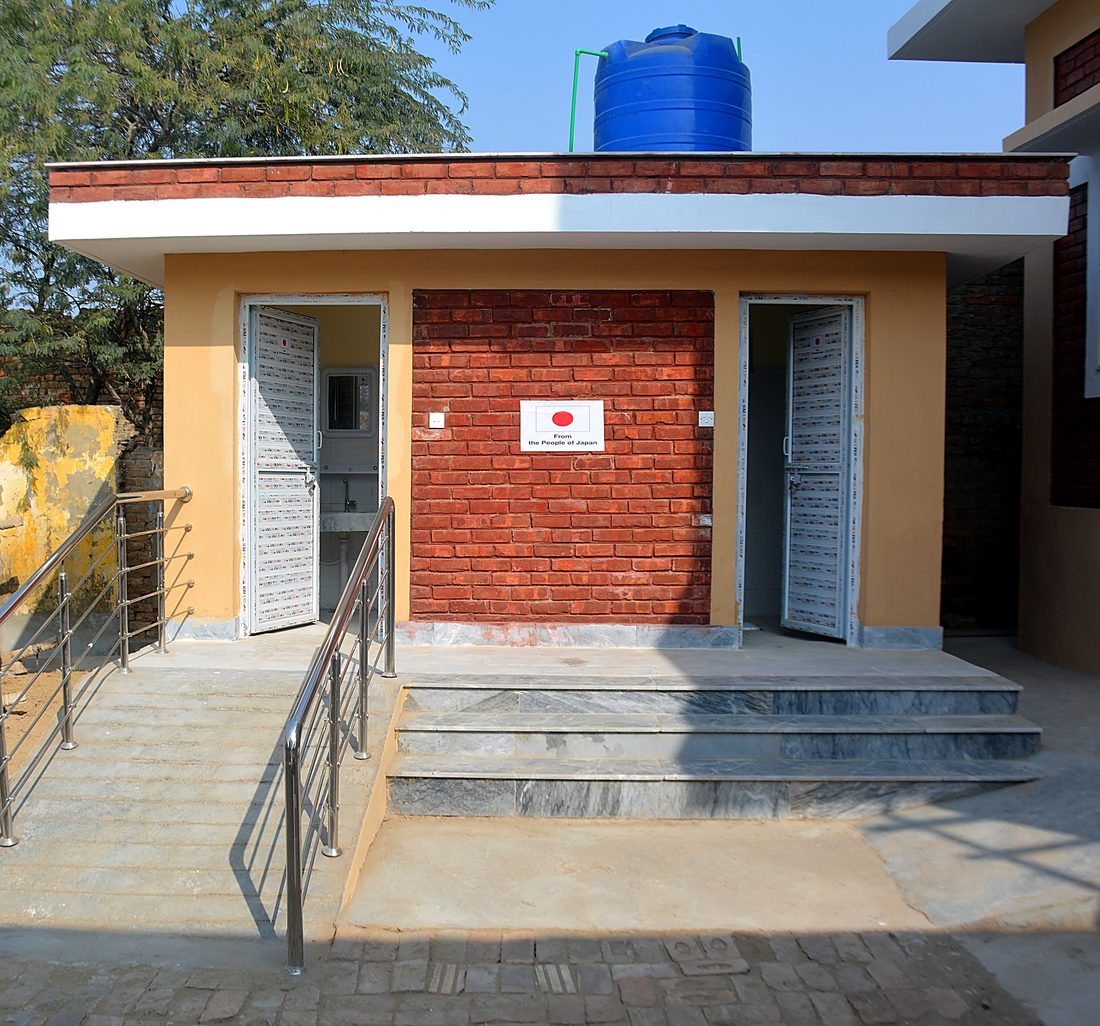
Safe, dignified latrines
Gender-separated, lockable toilets with handwashing points, built at least 30 m from water sources to Sphere standards, with ramps and rooftop tanks for accessibility — privacy and safety, especially for women and girls.
What the WASH work has delivered
*Verified through post-installation water-quality testing. Figures aggregated from KnK Japan's flood-response WASH projects, 2020–2025, supported by Japan Platform.
WASH in Schools: keeping girls in the classroom
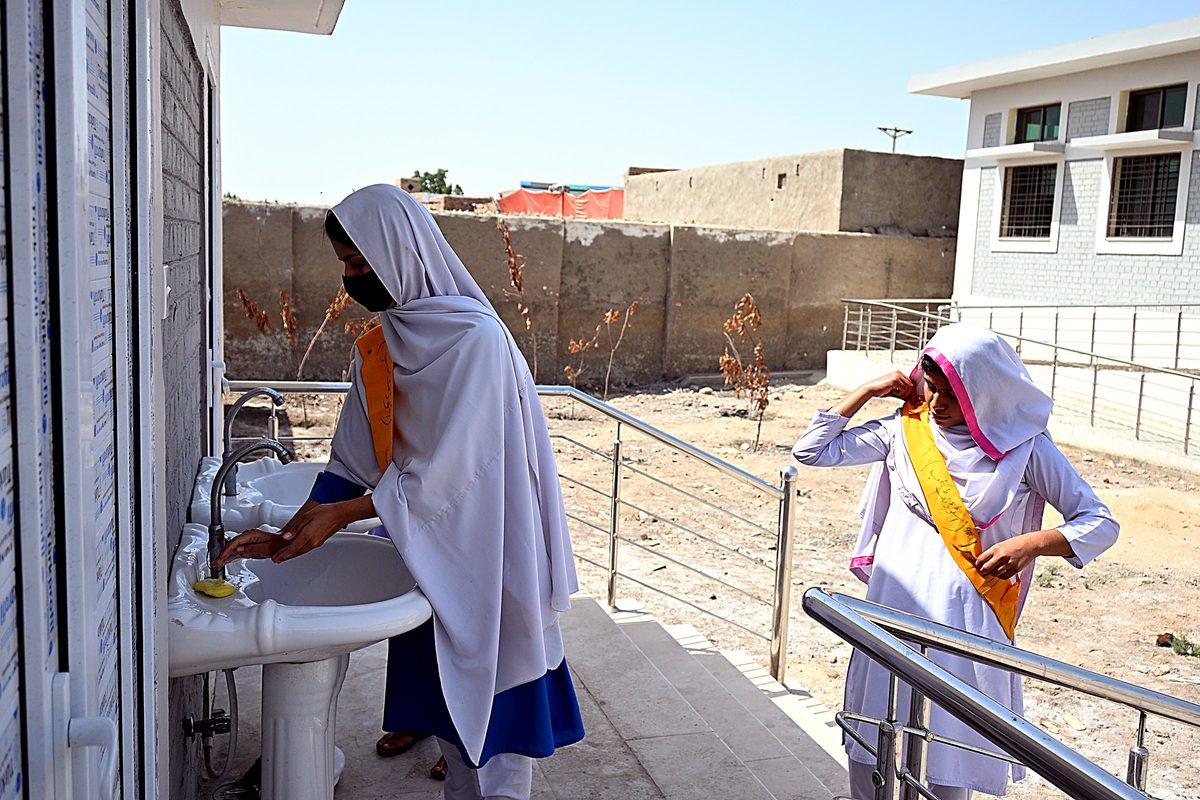
A girl will not stay in a school that has no safe toilet, no clean water and nowhere to wash her hands. When KnK Japan rebuilds or retrofits a flood- or disaster-damaged school, water, sanitation and hygiene are built in from the start.
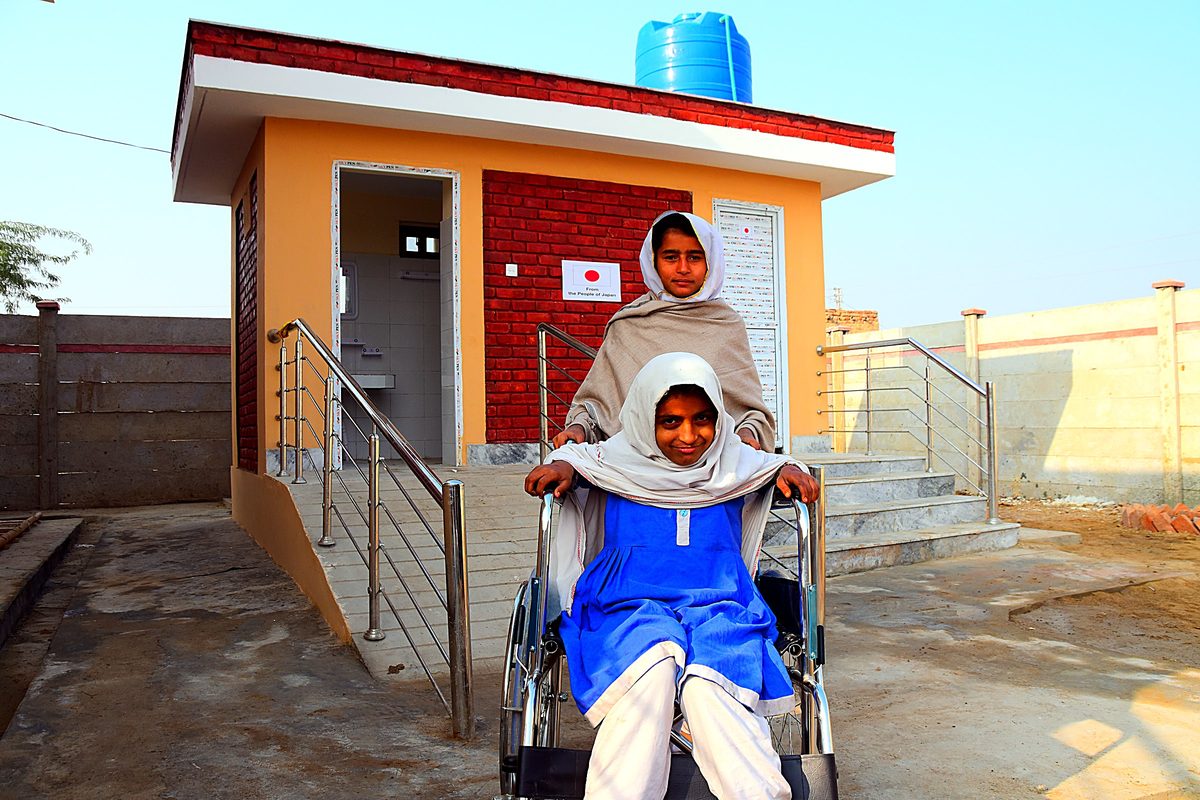
Across girls' schools in Balochistan (Sohbatpur and Usta Muhammad districts) and Khyber Pakhtunkhwa (Oghi area), KnK has delivered gender-separated, inclusive toilet blocks, handwashing stations and safe drinking-water supply — designed with menstrual hygiene management in mind and made accessible for girls with disabilities. Student Girls' Circles and health & hygiene sessions carry these practices into daily habits.
Run by the community, built to last
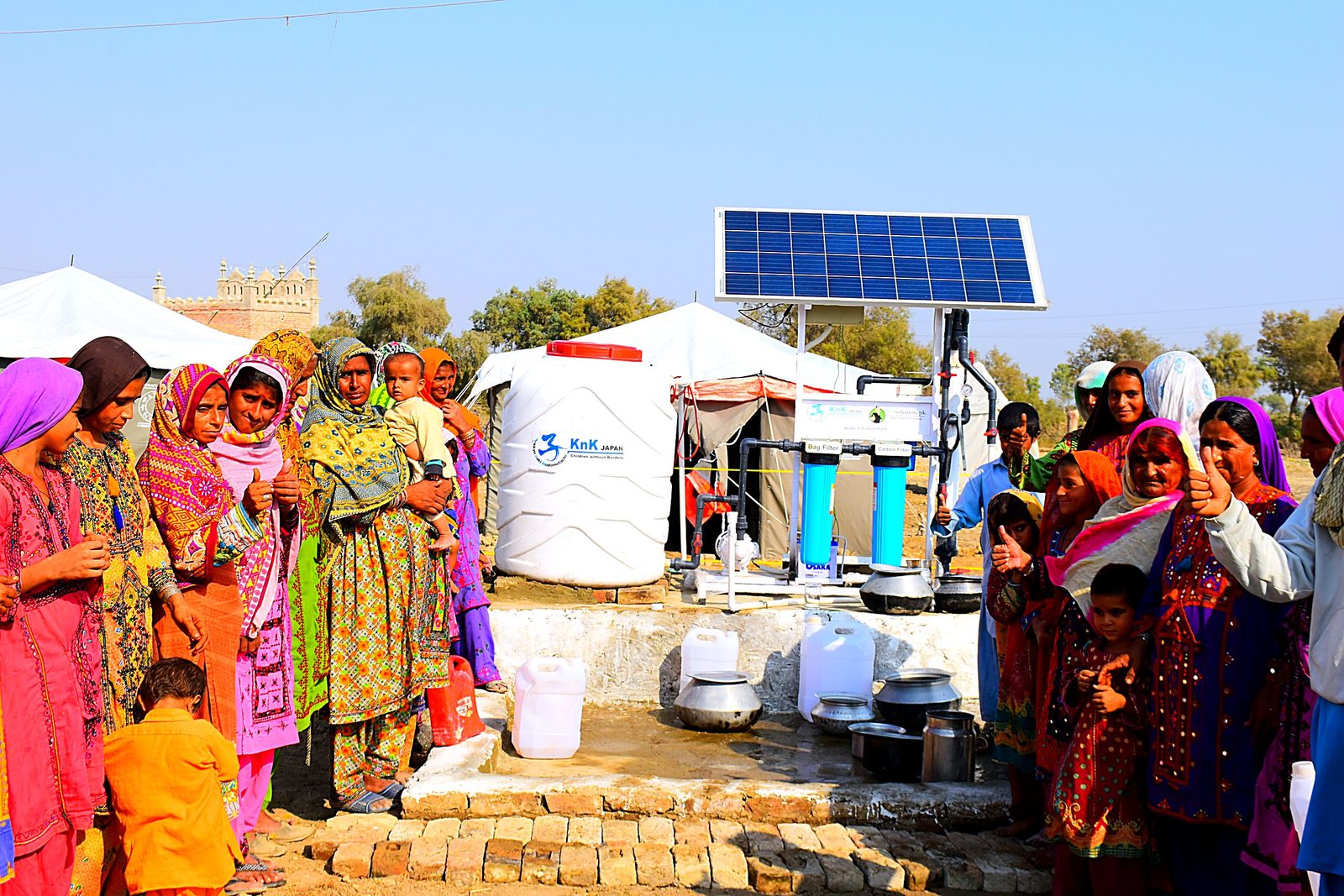
Every plant is handed to a local committee trained to operate, clean and maintain it. The 2025 Punjab response formed 10 Camp/WASH committees; the 2023 Sindh and Balochistan response formed 13 water-management committees — many sustained by small community-collected maintenance funds, with the poorest households exempt.
Spare cartridge filters supplied with the plants keep filtration running for a full year; and the people closest to each tap — overwhelmingly women and children — are the ones keeping the water flowing.
Where the programme has responded
Responses to the 2010 super-floods and 2022 monsoon floods, with deployments across Sindh, Balochistan and Khyber Pakhtunkhwa — each delivered with local partners and aligned to Sphere and the Core Humanitarian Standard.
Punjab Floods 2025
Rangpur Union Council, District Muzaffargarh
- 5 solar-powered filtration units across the affected villages
- 2,315 people reached with safe drinking water (camp residents + nearby households)
- 20 gender-separated latrines across 10 mini-villages
- 267 community members trained (193 men / 106 women)
- 10 Camp / WASH committees formed
- 120 spare cartridge filters for one-year operation
Sindh & Balochistan Floods
Jacobabad, Qambar Shahdadkot–Jaffarabad, Sohbatpur, Usta Muhammad
- Initial response (Sep–Dec 2022): 3 solar ultrafiltration plants, 3 shared latrines, 51 hygiene-awareness sessions, 220 community members trained
- Extended response (Mar–Jul 2023): 13 plants (11 ultrafiltration + 2 reverse-osmosis), 8,792 people reached (1,256 households), 24 gender-separated group latrines, 586 trained (416 men / 170 women), 13 water committees